
• Summary
Last post:
March 31st, 2021
Kenya Cases
at the International Criminal Court & National Courts of Kenya
About This Trial
The post-election violence that occurred in Kenya in 2007 and 2008 has been the subject of investigation before the International Criminal Court and litigation against Kenyan officials before domestic courts. This page contains information on court proceedings that have been ongoing since 2011. As of January 2021, we are no longer providing updates on these cases, but all content will be available for future reference.
Archives
Court
Kenyan Court Awards Four SGBV Survivors Four Million Shillings
ICC Prosecutor Says She Had No Role in Kenyan Lawyer’s Surrender
Kenyan Court finds Government is Liable for Harm Suffered by Three Victims of Police Shootings
In Kenya, We are Late: Delayed Justice and Impunity for Election-Related Sexual Violence
Kenyan Judge to Set Judgement Date in SGBV Case in June
Experts Say OTP Did Not Follow the Evidence in Collapsed Kenya Cases
Police Shootings Petition Moves to Submissions Stage
Parties Fail to Reach a Settlement; Hearings Continue in Kenya Police Shootings Case
First Witness Testifies in Case Filed by Survivors of Kenya Police Shootings
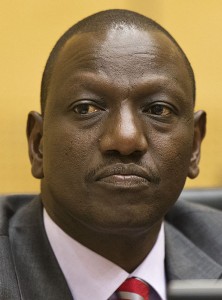
William Samoei Ruto © Michael Kooren / AFP / Getty Images
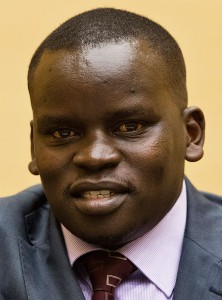
Joshua arap Sang © Michael Kooren / Reuters
Case One (Terminated)
Names: William Samoei Ruto and Joshua arap Sang
Nationality: Kenyan
Summons to appear issued: March 8, 2011
Charges: Ruto is alleged to be an indirect co-perpetrator of crimes against humanity of murder, forcible transfer, and persecution. Sang is alleged to have contributed to the commission of the crimes.
Trial start date: September 10, 2013
Charges terminated: April 5, 2016
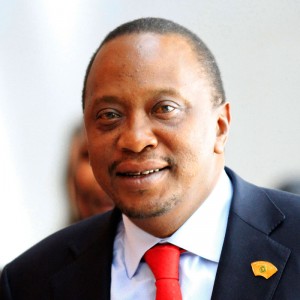
Uhuru Muigai Kenyatta © Tiksa Negeri / Reuters
Case Two (Terminated)
Name: Uhuru Muigai Kenyatta
Nationality: Kenyan
Summons to appear issued: March 8, 2011 (no longer in place as of March 13, 2015).
Charges: Kenyatta was alleged to be indirect co-perpetrators of the crimes against humanity of murder, forcible transfer, rape, persecution, and other inhumane acts.
Charges terminated: March 13, 2015
Introduction
The International Criminal Court’s (ICC) fifth-ever investigation has focused on the period of violence that followed the disputed presidential elections in Kenya held on December 27, 2007. In December 2010, the prosecutor requested that six individuals be summoned to appear before the court in two separate cases. Charges against two of them, Henry Kiprono Kosgey and Muhammed Hussein Ali, were rejected by Pre-Trial Chamber II on January 23, 2012.
The remaining four accused were divided into two separate cases. The first case involves two members of the Orange Democratic Movement (ODM), the opposition party at the time of the elections, and case two involves two members of the Party of National Unity (PNU), then the incumbent party. The prosecutor has brought charges against Ruto and Sang, members of the ODM at the time of violence, for the crimes against humanity of murder, forcible transfer, and persecution, allegedly committed against supporters of the PNU.
The prosecutor also brought charges against Francis Muthaura and Uhuru Kenyatta, members of the PNU at the time of the violence, for the crimes against humanity of murder, forcible transfer, rape, persecution, and other inhumane acts allegedly committed against ODM supporters, partly in retaliation against attacks against the PNU supporters. The charges against Muthaura were withdrawn in March 2013. The charges against Kenyatta were withdrawn in December 2014, terminating the case before the trial chamber.
The following overview looks at the cases in more detail.
How did the ICC become involved in Kenya?
Kenya ratified the Rome Statute, the founding treaty of the ICC, on March 15, 2005. This allowed the court jurisdiction over war crimes, crimes against humanity, and genocide committed by Kenyan nationals or on Kenyan territory after July 1, 2002 – the date that the Rome Statute entered into force. However, the ICC only has jurisdiction in cases where the government proves unwilling or unable to investigate and prosecute those crimes.
The Government of Kenya established an international Commission of Inquiry on Post Election Violence (CIPEV) in February 2008, which became known as the Waki Commission after the Kenyan Court of Appeals Judge Philip Waki, who chaired the body. The Waki Commission published a report recommending that the government establish a special tribunal of national and international judges to investigate and prosecute perpetrators of the post-election violence. However, it was made clear that if the tribunal was not set up within a certain period, information collected by the Waki Commission would be passed to the ICC, including a sealed envelope of names of those suspected to be most responsible for the violence. In February 2009, the Kenyan parliament voted against a bill to establish the special tribunal, and no further action was taken by the government. Therefore, in July 2009, the ICC prosecutor was sent extensive documentation compiled by the Waki Commission.
On November 26, 2009, following analysis of this documentation, the prosecutor requested authorization from the court to open an investigation into crimes against humanity allegedly committed in relation the post-election violence in Kenya. This was the first time that the prosecutor had invoked the proprio motu powers granted to him under Article 15 (3) of the Rome Statute (i.e. the right to initiate an investigation at his own instigation, without a referral from the State Party or the UN Security Council). The request was authorized by a majority decision of the pre-trial chamber on March 31, 2010.
How did the ICC prosecutor investigate and arrest suspects?
The Prosecutor’s investigation led him to identify six individuals that he alleged were responsible for crimes against humanity. On December 15, 2010, he submitted an application (accompanied by thousands of pages of supporting documents) requesting court summonses for these six people, divided into two separate cases. The Pre-Trial Chamber reviewed this evidence and determined that there were reasonable grounds to believe that those individuals had committed the crimes alleged in the Prosecutor’s application. The request was therefore granted, and the summonses were issued, on March 8, 2011. Charges against Ruto, Sang, Muthaura, and Kenyatta were confirmed on January 23, 2012.
Summonses were deemed sufficient to ensure that the people in question would come to the Court (otherwise warrants of arrest would have been issued).
What was the result of the confirmation of charges hearing?
The confirmation of charges hearing for Ruto, Kosgey, and Sang took place from September 1 to 8, 2011 at the International Criminal Court. The hearings for Muthaura, Kenyatta, and Ali lasted from September 21 to October 5, 2011.
The decision on the confirmation of charges for both cases was announced on January 23, 2012. Pre-Trial Chamber II found that based on the evidence presented by the prosecution that the crimes against humanity charged in case one – murder, deportation or forcible transfer, and persecution – had been committed. The judges further stated that there are substantial grounds to believe Ruto is responsible for those crimes against humanity as an indirect co-perpetrator, and Sang contributed to the crimes committed by a group of persons, led by Ruto, who had a common purpose. The charges against Kosgey were rejected.
In case two, the judges also held that the evidence established substantial grounds to that the crimes against humanity charged – murder, deportation or forcible transfer, rape, other inhumane acts, and persecution – were committed. The pre-trial chamber found substantial grounds to believe Muthaura and Kenyatta were criminally responsible for the alleged crimes as indirect co-perpetrators. The charges against Ali were rejected.
Why were charges not confirmed against Ali and Kosgey?
On January 23, 2012, Pre-Trial Chamber II found that the prosecutor’s evidence failed to satisfy the evidentiary threshold required under the Rome Statute to bring Kosgey and Ali to trial. Specifically in regards to Kosgey, the chamber found that the prosecutor relied on one anonymous and insufficiently corroborated witness. The chamber also determined that Kosgey suffered prejudice due to the redaction of certain dates related to a number of meetings that he allegedly attended, which proved to be essential for his defense and for the finding on his criminal responsibility.
With regards to Ali, the chamber found that there was not sufficient evidence to connect the Kenya Police to attacks carried out in the areas where perceived ODM supporters resided. The Prosecutor alleged Ali, the former Commissioner of the Kenya Police, contributed to the crimes through directing the Kenya Police to not prevent attacks carried out by PNU supporters. Without sufficient evidence of police involvement, however, the chamber declined to confirm charges.
Why were charges later dropped against Francis Muthaura?
On March 11, 2013 the Office of the Prosecutor announced it was dropping all charges against Muthaura, saying it now had insufficient evidence to have a reasonable hope of a conviction. It cited in particular the loss of a key witness who had recanted testimony and claimed to have received bribes from defendants in the case, the deaths of other potential witnesses since 2007/8, and a lack of cooperation from the Kenyan government in gathering testimony.
Why were charges dropped against Uhuru Kenyatta?
On December 5, 2014, the Office of the Prosecutor announced it was withdrawing all charges against Kenyatta. The decision followed a trial chamber order rejecting a request to postpone the trial and that the prosecutor give notice within one week whether she will withdraw the charges or proceed to trial. (In September 2014, the prosecutor requested an indefinite adjournment to the trial because the evidence was “insufficient to prove Mr. Uhuru Kenyatta’s alleged criminal responsibility beyond reasonable doubt.”) In the withdrawal notice, the prosecutor stated that the evidence had not improved and cited a lack of cooperation from the Kenyan government as part of the reason for dropping the charges.
On March 13, 2015, the judges of Trial Chamber V(b) unanimously terminated the proceedings against Kenyatta as well as his summons to appear. However, the chamber noted that if new evidence became available, the decision to terminate proceedings would not prejudice the prosecution from bringing charges again.
Why were the charges terminated against Ruto and Sang?
In a majority decision issued on April 5, 2016, the judges of Trial Chamber V(a) terminated the charges against Ruto and Sang because the evidence against them was weak. The judges said witness intimidation and bribery was a key factor in the deterioration of the evidence against the two though the judges said there was no evidence that either Ruto or Sang were involved in interfering with the witnesses. The judges made the decision to terminate the charges against Ruto and Sang before the two presented their defense. This decision is the first at the ICC that addresses a “no case to answer” application filed by the defense of an accused person after the prosecution has concluded their case.
The arrest warrants for offense against the administration of justice
The ICC has issued arrest warrants for three Kenyan individuals for allegedly bribing or attempting to bribe eight prosecution witnesses in the now-terminated case against Ruto and Sang. The first arrest warrant was issued in August 2013 against a former journalist, Walter Osapiri Barasa, for his alleged bribing or attempting to bribe three prosecution witnesses. Barasa challenged the arrest warrant in the Kenyan courts and that challenge is yet to be resolved. The second arrest warrant was issued in March 2015 against lawyer Paul Gicheru, and another individual, Philip Kipkoech Bett. They are alleged to have bribed or attempted to bribe six prosecution witnesses. There is an overlap between the arrest warrants for Barasa, Gicheru, and Bett which is why the total number of prosecution witnesses involved is eight.
Domestic cases related to post-election violence crimes
There are three public interest cases being heard at the High Court of Kenya involving different categories of survivors of the violence that engulfed the country between December 2007 and February 2008. The first, filed in November 2011, concerns 25 people displaced from their homes. The second, filed in February 2013, involves eight survivors of sexual and gender based violence. The third case, which was first filed in February 2013, involves 13 victims of police shootings. In each case, the citizens concerned and non-governmental organizations supporting them are asking the court to find the government failed to protect them and award reparations to them.
What is the background to the post-election violence in Kenya?
The post-election violence in Kenya from December 2007 to February 2008 echoed the outbreaks of violence that have followed national elections since the multi-party system was established in the country in 1991. In 2007-2008, the violence was ignited by allegations of election fraud. The main opposition party, the Orange Democratic Movement, had been successful in the parliamentary vote, and its presidential candidate Raila Odinga was showing a lead of a million votes towards the end of the vote count. But in the last few hours of vote counting resulted in an apparent victory for the incumbent President Kibaki of the Party of National Unity. Violence took place in many regions of Kenya and as yet, few perpetrators have been held to account.
The ICC prosecutor alleges that the post-election violence was coordinated and targeted civilians. The ICC prosecutor argues that initially, ODM opposition supporters were mobilized to attack ethnic Kikuyu and others perceived to have voted for President Kibaki of the PNU. It is further alleged that retaliation was then targeted at people of Kalenjin, Luo, and Luhya ethnicity, who were perceived as affiliated with the ODM opposition party. There are also allegations of police violence at this time. In the period from the December 27 election to February 28, 2008 (when a power-sharing deal was struck between the two main parties), it is reported that between 1,133 and 1,220 people were killed, 3,561 were injured, and approximately 350,000 were displaced. An increased number of rapes and acts of sexual violence also took place during this time.
The Accused
William Samoei Ruto: Currently he is the Deputy President of the Republic of Kenya. At the time of the attacks he was a senior member of the Orange Democratic Movement (ODM).
Joshua arap Sang: Head of operation at at Kass FM radio station until October 2012. At the time of the attacks, Sang was the host of Kass FM’s popular breakfast show, Lenee Emet, which directly translated from Kalenjin means “what the countryis talking about.”
The Prosecution
- Fatou Bensouda, Prosecutor
- Anton Steynberg, Senior Trial Attorney
- Cynthia Tai, Senior Trial Attorney
The Defense for William Samoei Ruto
- Karim Khan
- David Hooper
- Shyamala Alagendra
- Venkateswari Alegandra
- Essa Faal
The Defense for Joshua Arap Sang
- Joseph Kipchumba Kigen-Katwa
- Caroline Buisman
- Logan Hambrick
The Office of Public Counsel for the Defense
- Xavier-Jean Keïta
The Office of Public Counsel for Victims
- Paolina Massidda
Judges of Trial Chamber V(A)
- Judge Chile Eboe-Osuji (Presiding)
- Judge Olga Herrera Carbuccia
- Judge Robert Fremr
Registry
- Herman von Hebel, Registrar
Key groups, organizations and individuals that could be referred to during proceedings
- PNU: The Party of National Unity. The ruling party at the time of the December 2007 elections, led by President Mwai Kibaki. The party ceased to exist after the March 2013 General Elections.
- President Mwai Kibaki: Former leader of the Party of National Unity. He served as President of Kenya from December 2002 to April 2013.
- ODM: The Orange Democratic Movement. The opposition party at the time of the December 2007 elections, led by Raila Odinga. The ODM formed a power-sharing coalition government with the Party of National Unity after the disputed December 2007 elections. After the March 2013 General Elections, ODM became an opposition party in the National Assembly and Senate.
- Raila Odinga: Leader of the Orange Democratic Movement and presidential candidate at the time of the December 2007 elections. He contested the 2013 presidential election and lost.
- Kofi Annan: Former UN Secretary-General and chair of the African Union-appointed team sent to mediate between the two political parties during the post-election violence.
- Mohammed Hussein Ali: The Commissioner of Police at the time of the 2007 elections. He left the police in September 2009 but remained in public service until May 2012. The ICC Prosecutor had named him as one of the three suspects in Kenya case two. Judges of Pre-Trial Chamber II, however, declined in January 2012 to confirm the charges against Ali.
- Henry Kiprono Kosgey: The Chairman of the Orange Democratic Movement (ODM) during the 2007 elections. The ICC Prosecutor had named him as one of the three suspects in Kenya case one. Judges of Pre-Trial Chamber II, however, declined in January 2012 to confirm the charges against Kosgey. Although he remains the Chairman of the Orange Democratic Movement, Kosgey reduced his political engagements after the March 2013 elections.
- Francis Kirimi Muthaura: Served as the Head of the Public Service and Secretary to the Cabinet in the lead up to the 2007 elections and after. In his capacity as the Head of Public Service, Muthaura also chaired the National Security Advisory Committee. Muthaura left public service in January 2012. It is for Muthaura’s role as the chairman of the National Security Advisory Committee that the ICC Prosecutor sought to charge him for crimes against humanity. In March 2013, however, the prosecutor filed a notice to withdraw the charges against Muthaura. Trial judges later confirmed the withdrawal of the charges against him.
- Uhuru Muigai Kenyatta: Currently he is the President of the Republic of Kenya. At the time of the attacks he was a senior member of the Party of National Unity (PNU). He was previously charged with five counts of crimes against humanity, but the charges were withdrawn on December 5, 2014 after lengthy delays to the start of his trial.
- Kikuyu: The largest ethnic group in Kenya. President Mwai Kibaki is ethnic Kikuyu, and people of Kikuyu ethnicity were perceived to be supporters of the PNU during the post-election violence.
- Kamba: An ethnic group whose members were perceived to be supporters of the PNU during the post-election violence.
- Kisii: An ethnic group whose members were perceived to be supporters of the PNU during the post-election violence.
- Meru: An ethnic group whose members were perceived to be supporters of the PNU during the post-election violence.
- Kalenjin: An ethnic group indigenous to the Great Rift Valley, whose members were perceived as supporters of the ODM during the post-election violence.
- Luhya: The second largest ethnic group in Kenya. People of Luhya ethnicity were targeted in the post-election violence both as perceived supporters of the ODM and of the PNU.
- Luo: The third largest ethnic group in Kenya. People of Luo ethnicity were perceived to be supporters of the ODM during the post-election violence.
- Mungiki: A criminal gang allegedly mobilized by Kikuyu leaders during the post-election violence to carry out attacks on non-Kikuyu groups.
- The Waki Commission or the Commission of Inquiry on Post-Election Violence (CIPEV): The international body established by the government of Kenya in February 2008 to investigate the post-election violence. It became known as the Waki Commission after its chair, the Kenyan Court of Appeals Judge Philip Waki. The Waki Commission submitted a report and recommendations to the government of Kenya in October 2008.
Places that could be referred to during the proceedings
- Rift Valley province: Up until the 2013 elections, Kenya was divided into administrative units called provinces. The largest of them was the Rift Valley Province, running north to south across the west of the country. Here, the distribution of land has historically caused conflict between ethnic groups perceived as indigenous to the region (such as the Kalenjin) and those perceived as ‘outsiders’ (such as the Kikuyu). This province was one of those most affected by the post-election violence. Particularly violent attacks were allegedly carried out in the southern cities of Eldoret, Naivasha, and Nakuru.
- Nairobi province: the province that is home to Kenya’s capital city Nairobi, where much of the post-election violence took place. Nairobi’s slum districts, notably the largest slum Kibera, were reportedly key areas of police violence and Kikuyu gang violence.
- Western province: one of Kenya’s smaller provinces and one of those most affected by violence, particularly in the area of Mount Elgon.
- Central province: One of Kenya’s smaller provinces, this area remained relatively calm during the election campaign and the voting and counting period; tensions only rose and violence broke out after attacks on the Kikuyu in the Rift Valley.
- Coast province: the province in the south-east of the country comprising the coastal strip along the Indian Ocean. Violence was allegedly directed at the Kikuyu and Meru communities here.
- Nyanza province: one of Kenya’s smaller provinces in the south-west of the country, and one of those most affected by the post-election violence, particularly police violence.
- Kisumu: a city in Nyanza province and a traditional stronghold of Raila Odinga, the ODM presidential candidate, where many ODM-led protests and PNU-led attacks took place.
Ruto and Sang Trial Prosecution Witnesses
All witnesses, with exception of the expert witnesses, have testified under court-approved protection measures. These include being identified by a pseudonym and being hidden from view of the public gallery with curtains hiding them. Their voices are distorted in the broadcast to the public gallery and in the live stream of the court proceedings. Their faces are also pixilated in the live stream. Everyone in the courtroom can see and hear the protected witnesses, but they are bound by the court’s confidentiality rules from revealing their identities. This includes Deputy President William Samoei Ruto and former journalist Joshua arap Sang when they are in the courtroom.
- Witness 536: A crime base witness, who testified about how she and others of the Kikuyu ethnic group sought refuge in a church in Kiambaa after young Kalenjin men had burned down several homes in nearby villages following the disputed December 2007 presidential poll. She also witnessed the rape of a woman by young Kalenjin men and an elderly man struck with an axe and spears on the head.
- Witness 326: A crime base witness, who testified mostly in private session. The witness described how the group opposing a draft constitution, which was put to referendum in November 2005, became the Orange Democratic Movement (ODM) party. He also described how Ruto became one of the key leaders in the ODM and was responsible for the party’s campaigns in Rift Valley Province in the lead up to the 2007 elections. The witness also explained that he knew Joshua arap Sang as a radio presenter for Kass FM, a station that broadcast in the Kalenjin language and was widely listened in the Rift Valley Province.
- Witness 189: A crime base witness of Kikuyu ethnicity, who testified that in the days following the 2007 presidential election she saw lorries of Kalenjin youth with bows and arrows. She also said while seeking refuge in a compound, she witnessed armed Kalenjin youth chase Kikuyu youth away. The Kalenjin youth then stormed the compound she was in.
- Witness 376: A crime base witness, who described an attack in the Langas area near the town of Eldoret during the violence that followed the December 2007 elections. He said the attack took place 200 meters from his house and that it involved more than ten young men with bows and arrows and spears, directed by an older man that the witness knew. He also testified that he later lived in a camp for those displaced in the violence that was set up at the showground of Eldoret. He described the conditions in the camp as “pathetic.”
- Witness 487: A crime base witness, who testified with voice and facial distortion for three days, partly in private session. The witness testified how he saw a man being hacked and beaten to death. He explained that Kalenjin men armed with machetes and bows and arrows would question people who approached the path they were on, and based on the answer the unarmed people gave, they would be allowed to pass or be attacked. He also described a violent stand-off between Kalenjins and Kikuyus on opposite sides of a river.
- Witness 268: A crime base witness, who testified that in Kapsabet, many Kikuyus’ homes and business premises were destroyed while Kalenjin-owned businesses marked with the word kitwek were left intact. The witness also said that listeners to Sang’s morning show on Kass FM radio station called in to urge others to vote for the ODM party in the lead up to the 2007 elections and that Kass FM had a political agenda.
- Witness 423: A crime base witness, who testified partly in private session. The witness, a Kikuyu, said that he was warned of attacks days before 2007 elections, by Nandi men, a sub-group of the Kalenjin ethnic group. The witness also described a four-day attack in Yamumbi setting hundreds of homes on fire and killing many Kikuyu people.
- Witness 535: A crime base witness, who testified that hundreds of people were ordered to carry their identity cards in their mouths when they came up to a road block controlled by the Luo and Luhya ethnic groups as they fled violence in their area after the 2007 elections. The witness also described seeing two individuals being beaten in two separate attacks on the way to Eldoret.
- Witness 356: A crime base witness, who testified that in the run-up to the 2007 election, William Samoei Ruto was simply declared the spokesman of the Kalenjin and not the “king” of the community as a previous witness had stated. Witness 356 was the first witness to have a lawyer present in the courtroom to help him navigate the rules around self-incrimination.
- Witness 128: A crime base witness, who testified that he fled his home after seeing a police officer killed with an arrow. He also testified that he saw Samson Charamboss, the former head of the presidential security service and the Kenyan police paramilitary unit, talk to young men controlling roadblocks during the post-election violence.
- Herve Maupeu: An expert witness, who is an Associate Professor of Political Science at the University of Pau and the Adour Region, which is located in southwestern France. This witness affirmed that the declaration of Ruto as Kalenjin spokesman was made in area of Eldama Ravine in the Rift Valley region. He said that the elections of 1992, 1997, and 2007 were marked by violence that took an ethnic dimension but that in 2008 the size of the militia groups in the Rift Valley had considerably increased to thousands of members.
- Witness 409: A crime base and a linkage witness, who testified that Ruto and former cabinet minister Henry Kosgey spoke in code during campaign rallies ahead of the 2007 presidential election, asking the Kalenjin to evict non-Kalenjins from the Rift Valley region.
- Witness 442: A crime base witness, who testified that Sang told Kass FM radio listeners that votes were being stolen as Kenya waited for the electoral commission to announce the full presidential results of the December 2007 elections. The witness said she did not hear Sang call on listeners of his radio station to stop the violence.
- Witness 508: A crime base witness, who testified about how he escaped nearly being killed at a road block by hiding his identity card. He said his name could be recognized as Kikuyu, which would make him a target to be killed.
- Witness 469: A crime base witness, who testified that Sammy Ruto, after he won the Kimumu seat, told his supporters about the eviction of the Kikuyu from the area and return to Othaya, referring to the parliamentary seat that was held by then President Mwai Kibaki, who is also a Kikuyu. The witness also described two arson incidents that she saw.
- Lars Bromley: An expert witness, who is a specialist in analyzing satellite images and related data. He works as the Principal Analyst at the Operational Satellite Applications Program (UNOSAT) at the United Nations Institute for Training and Research, which monitors natural disasters and human security and human rights events. Bromley testified that data analysis shows a spike in fires in January 2008 and that 506 buildings were burned in Eldoret in January 2008 around the time there was violence following the December 2007 presidential poll. He also said that there were another 190 structures that were possibly burned.
- Witness 673: A crime based witness who testified entirely in private session.
- Witness 247: A former staff member of the Commission of Inquiry into Post-Election Violence, commonly referred as the Waki Commission, gave his testimony in public but his name was not given. He testified about documents presented to the Waki Commission.
- Witness 613: A crime base witness, who partly in private session. The witness described some of the work done by Ruto’s assistant Farouk Kibet. She said his functions included organizing harambees, a Swahili word that is commonly used in Kenya to mean a fundraising event.
- Witness 405: A crime base witness, who testified under court-ordered protective measures, mainly in private session. The witness testified that allegations of vote rigging with pre-marked ballot papers ahead of the December 2007 presidential election sparked demonstrations in Eldoret a day before the poll.
- Gavin McFayden: He was one of the three members of the Commission of Inquiry into Post-Election Violence. He told the court that Ruto was one of the people named in what is generally known as “the envelope” in Kenya. This refers to a list of people who allegedly bear the greatest responsibility for the bloodshed that followed the December 2007 presidential election. The Commission drew up the list and sealed it in an envelope that they publicly gave to former United Nations Secretary General Kofi Annan in October 2008. The names have remained secret since, which is why the list has been the subject of speculation in Kenya.
- Witness 604: A crime base witness, who testified via video link from an undisclosed location in Nairobi. He was declared hostile by the trial judges following an application by the prosecution because his testimony in court diverged a great deal with the statements he had originally given to the prosecution. The prosecution asked the witness whether he recanted his earlier statements to investigators because he had been bribed. The answer is unclear because most of the final part of the prosecution’s cross-examination took place in private session. The witness then said he made allegations against Ruto because of money he received from the ICC. Witness 604 had a lawyer present with him during his testimony. He also had a partial immunity deal with the prosecution if he testified truthfully about any Article 70 violations.
- Witness 495: The witness testified from an undisclosed location in Nairobi via video link mostly in private session. The witness said he never made a statement to the prosecution about events before and after the December 2007 presidential poll in Kenya. The witness was declared hostile. Witness 495 had a lawyer present with him during his testimony. He also had a partial immunity deal with the prosecution if he testified truthfully about any Article 70 violations.
- Witness 516: The witness testified from an undisclosed location in Nairobi via video link, partially in private session. The witness testified that he met two men, who told him what to say when prosecution staff contacted him to testify in the trial. He also said he chose to testify because he was promised a “good life,” including payments for his children’s education. He was declared a hostile prosecution witness. Witness 516 had a lawyer present with him during his testimony. He also had a partial immunity deal with the prosecution if he testified truthfully about any Article 70 violations.
- Witness 637: The witness testified via video link from an undisclosed location in Nairobi mostly in private session. He told the court that three people had coached him in September 2011 to implicate Ruto and Sang on the promise that they would pay him once he testified before the ICC. The witness was declared hostile. Witness 637 had a lawyer present with him during his testimony. He also had a partial immunity deal with the prosecution if he testified truthfully about any Article 70 violations.
- Witness 800: A linkage witness, who testified that Ruto spoke in code about evicting Kikuyu during an October 2005 meeting at an undisclosed location. He also described a camp where retired military officers trained Kalenjin youth how to shoot arrows and set houses on fire about one month before the December 2007 presidential poll. During his testimony, he was represented by a lawyer appointed by the court.
- Witness 658: A linkage witness, who testified over a period of 11 days. He said that he saw crowds gather around a vehicle suspected of carrying rigged ballots shortly before the December 2007 elections. The witness also said that the day before the presidential poll Ruto gave an impromptu speech calling on the Kikuyu to leave Eldoret. He also testified that Sang incited violence on his radio program. Under cross-examination, the witness admitted that he did not attend two meetings where he alleged planning for the post-election violence occurred. He had a court appointed lawyer present during his testimony.
- Witness 789: The witness is one of nine witnesses who were compelled to testify by the court and testified almost entirely in private session. The brief comments he made in public related to a ceremony in which Ruto was made a Kalenjin elder at the Eldoret Sports Grounds.
- Witness 743: The witness, who testified with protective measures, was a listener of Sang’s radio program, and said Sang had called Ruto “a true leader” on the program. The witness also testified that he attended a fundraising event at which Ruto spoke about driving the Kikuyu out of the Rift Valley region. The judges declared the witness hostile because he later made statements that departed in whole or in part from statement he previously made to prosecution investigators.
December 27, 2007
General elections take place in Kenya.
December 30, 2007
Incumbent President Mwai Kibaki of the PNU is declared the winner of the general elections, though his ‘victory’ over opposition candidate Raila Odinga of the ODM amidst allegations of election fraud on both sides triggering outbreaks of violence.
February 5, 2008
The International Criminal Court Prosecutor says his office has begun a preliminary examination of the post-election violence in Kenya.
February 28, 2008
A mediation team, led by former UN Secretary-General Kofi Annan, oversees the signing of a power-sharing agreement called the National Accord and Reconciliation Act, which establishes a coalition government with Kibaki as president and Odinga as prime minister. It also set up the Commission of Inquiry on Post-Election Violence (CIPEV), which later became known as the Waki Commission after its chair, Judge Philip Waki.
October 15, 2008
The Waki Commission submits its report and recommendations to the government of Kenya; recommendations include the establishment of a special tribunal of national and international judges to investigate and prosecute perpetrators of the post-election violence. The report also states that if the tribunal is not set up within six months, information collected by the Waki Commission will be passed to the ICC, including a sealed envelope of names of those suspected to be most responsible for the violence.
February 12, 2009
The Kenyan parliament votes against the establishment of the proposed tribunal made up of Kenyan and international judges to address the post-election violence.
July 3, 2009
Three Kenyan Cabinet ministers sign an agreement with the ICC committing Kenya to establish a credible and independent tribunal to try perpetrators of post-election violence by August.
July 16, 2009
The Prosecutor is sent six boxes containing documents and supporting materials compiled by the Waki Commission during its investigations. The documentation includes a sealed envelope that contains a list of suspects identified by the Waki Commission as those most responsible for the violence.
November 9, 2009
Parliament begins debate on another constitutional amendment to form a local tribunal. To date that debate has not concluded.
November 26, 2009
ICC Prosecutor Luis Moreno-Ocampo files a request seeking authorization from Pre-Trial Chamber II to open an investigation in relation to the crimes allegedly committed during the 2007-2008 post-election violence in Kenya.
March 31, 2010
Pre-Trial Chamber II issues its majority decision (2-1) that there is a reasonable basis to proceed with an investigation into the situation in Kenya in relation to crimes against humanity within the jurisdiction of the Court committed between June 1, 2005 and November 26, 2009.
December 15, 2010
The ICC Prosecutor requests the issuance of ‘summonses to appear’ for six people in the court’s Kenya investigation – William Samoei Ruto, Henry Kiprono Kosgey, Joshua arap Sang (case one) and Francis Kirimi Muthaura, Uhuru Muigai Kenyatta, and Mohamed Hussein Ali (case two) – for their alleged responsibility in the commission of crimes against humanity.
March 8, 2011
Pre-Trial Chamber II issues the summonses to appear for the aforementioned six individuals, as it finds reasonable grounds to believe that they committed the crimes alleged by the Prosecutor.
March 31, 2011
Kenyan government files an application challenging the ICC’s jurisdiction over the cases.
April 7, 2011
The first three defendants (Ruto, Kosgey, and Sang) make their initial appearance before the Court in The Hague.
April 8, 2011
The second three defendants (Muthaura, Kenyatta, and Ali) make their initial appearance before the Court in The Hague.
September 1, 2011
Confirmation of charges hearing begins for the first three defendants (Ruto, Kosgey, and Sang).
September 8, 2011
Confirmation of charges hearing concludes for the first three defendants.
September 21, 2011
Confirmation of charges hearing begins for the second three defendants (Muthaura, Kenyatta, and Ali).
October 5, 2011
Confirmation of charges hearing concludes for the second three defendants.
November 25, 2011
Twenty-five individuals and three organizations file a petition asking the High Court of Kenya to find the government failed to protect them when they were displaced from their homes during the post-election violence of December 2007 to February 2008.
January 23, 2012
Pre-Trial Chamber II confirms charges against Ruto, Sang, Muthaura, and Kenyatta. Charges against Ali and Kosgey are rejected.
January 26, 2012
Uhuru Kenyatta resigns as Finance Minister, and Francis Muthaura resigns as Head of Civil Service. Kenyatta keeps his post as Deputy Prime Minister.
December 4 , 2012
Kenyatta and William Ruto, who formerly belonged to a competing political party, form an alliance in advance of the March 2013 presidential election. Kenyatta runs as the presidential candidate with Ruto as his running mate.
December 18, 2012
The first witness for the petitioners testifies in the internally displaced persons (IDP) case before the High Court of Kenya.
February 13, 2013
Fifteen individuals and four non-governmental organizations file a petition asking the High Court of Kenya to find the police unlawfully injured them during the post-election violence of December 2007 to February 2008.
February 20, 2013
Eight individuals together with four non-governmental organizations file a petition asking the High Court of Kenya to find the government failed to protect them from sexual and gender-based violence (SGBV) during the post-election violence of December 2007 to February 2008.
March 4, 2013
The presidential election is held in Kenya.
March 11, 2013
The Office of the Prosecutor drops all charges against Francis Muthaura after a key witness recanted his statements linking Muthaura to planning the 2007-2008 post-election violence.
March 30, 2013
After receiving legal challenges to the poll results, the Supreme Court of Kenya validates the election of Kenyatta and Ruto as president and deputy president, respectively.
April 9, 2013
Kenyatta and Ruto officially take office.
June 18,2013
Trial Chamber V(a) rules, in a majority decision, that Ruto does not have to be continuously present at his trial in The Hague due to the exceptional nature of his position as a sitting deputy president. The prosecution appeals the decision, and Ruto is required to attend trial in person until the Appeals Chamber issued a judgment.
September 10, 2013
The trial for Ruto and Sang begins. The trial was initially scheduled to start April 10, 2013. Then it was postponed to May 28. Judges ordered the postponements following defense requests for more time to prepare their case.
October 18, 2013
Trial Chamber V(b) rules, in a majority decision, that Kenyatta does not have to be continuously present at his trial The Hague due to the exceptional nature of his position as a sitting head of state.
December 19, 2013
The prosecution requests a three-month postponement in the case against Kenyatta. The trial was scheduled to begin February 5, 2014.
February 5, 2014
Trial Chamber V(b) holds a status conference to discuss the prosecution request to postpone the trial. No new start date is scheduled at this time.
September 5, 2014
The prosecution requests Trial Chamber V(b) to indefinitely adjourn the Kenyatta trial saying it is not in a position to proceed to trial due to lack of cooperation by the Kenyan government.
February 24, 2014
The first witness for the petitioners testifies in the SGBV case before the High Court of Kenya.
October 8, 2014
Trial Chamber V(b) holds a status conference to discuss the prosecution’s request for adjournment. The defense for Kenyatta asked the judges to terminate his case and enter a verdict of not guilty.
December 5, 2014
The ICC prosecutor withdraws the charges against Kenyatta. This was done in response to a December 3, 2014 Trial Chamber V(b) order for the prosecutor to give notice within one week that she will either withdraw charges or proceed to trial.
March 10, 2015
Warrants of arrest are issued under seal by the ICC against Paul Gicheru and Philip Kipkoech Bett. The warrants are made public on September 10, 2015. Both are allegedly responsible for offenses against the administration of justice for corruptly influencing witnesses regarding cases from the ICC situation in Kenya.
March 13, 2015
Trial Chamber V(b) unanimously terminates the proceedings against Kenyatta after the prosecution withdrew the charges against him.
January 12-15, 2016
Hearings are held in order to consider submissions on whether the prosecution in the Ruto and Sang case has presented enough evidence to warrant a defense or whether there is “no case to answer.”
April 5, 2016
In response to the “no case to answer” submissions, Trial Chamber V(a), in a majority decision, terminates that proceedings against Ruto and Sang and vacates the three charges of crime against humanity they were facing. The decision is made without prejudice to future prosecutions at the ICC or in domestic courts.
April 21, 2016
Petitioners close their case after seven witnesses have testified in the IDP case before the High Court of Kenya.
September 2, 2016
Petitioners close their case after presenting 16 witnesses in the SGBV case before the High Court of Kenya.
December 10, 2020
The Kenyan High Court awards four million shillings to each of four survivors of sexual violence committed during the 2007-2008 post-election violence.
July 27, 2020
A Kenyan High Court judge finds the government liable for harm suffered by three victims of police shootings.